Local detail
What You Pay
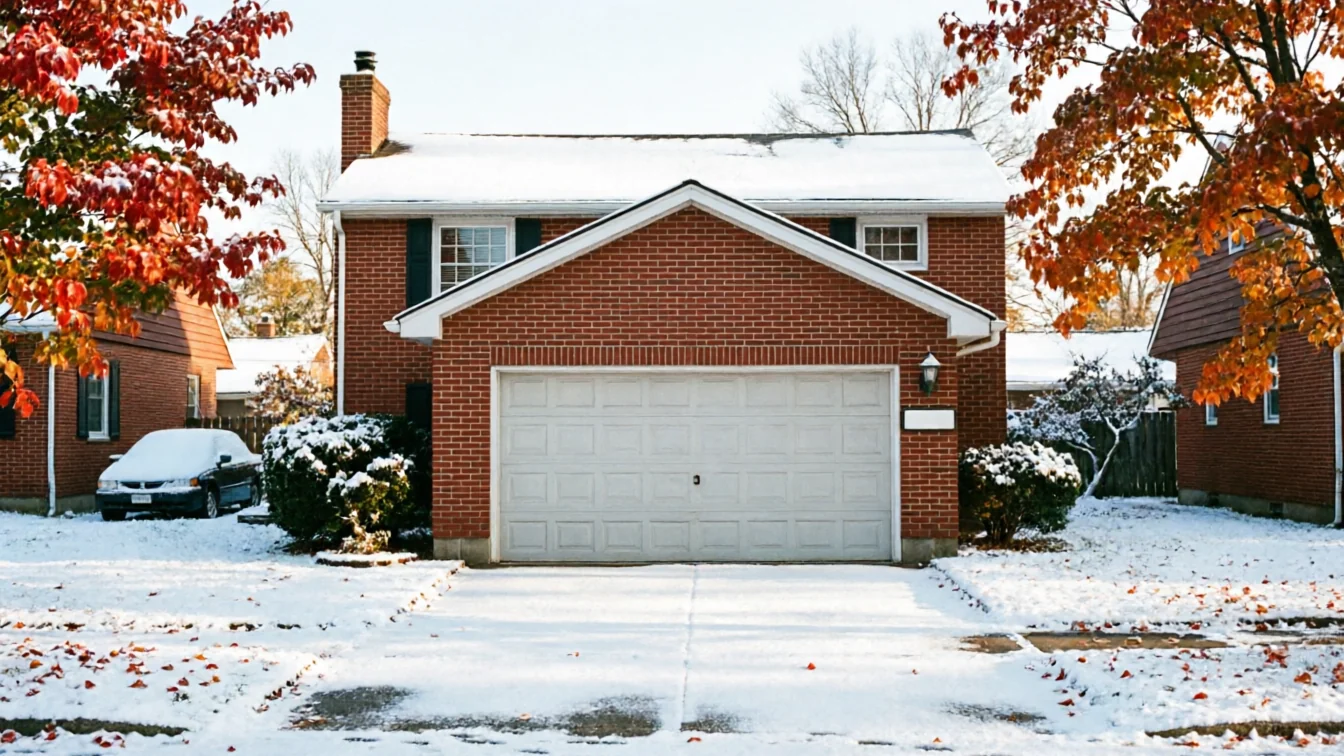
Most houses on this side of Framingham date to the 1960s and 70s, with the broader stock running 1938 to 1993 and a median build year of 1968. That matters for pricing because a door built for a 1968 opening isn't the same job as a door built for a 2015 one. Original openings in this area often run narrower or shorter than current standard sizes, and the jamb and header framing behind the trim wasn't built with a modern insulated door in mind. You're not just buying a door - you're sometimes buying trim repair, header reinforcement, or a weatherstrip retrofit to make a standard-size door fit an opening that's fifty-some years old. Median household income in the wider service area sits at $141,440, and across the 199,031 owner-occupied houses here, a lot of garages are original - first door, first opener, first set of hardware. If your door has never been replaced, expect the job to include more than just swapping panels. We'll tell you up front if it's a straight swap or if the opening needs work, because guessing wrong on that number helps nobody.
The area
What to Check
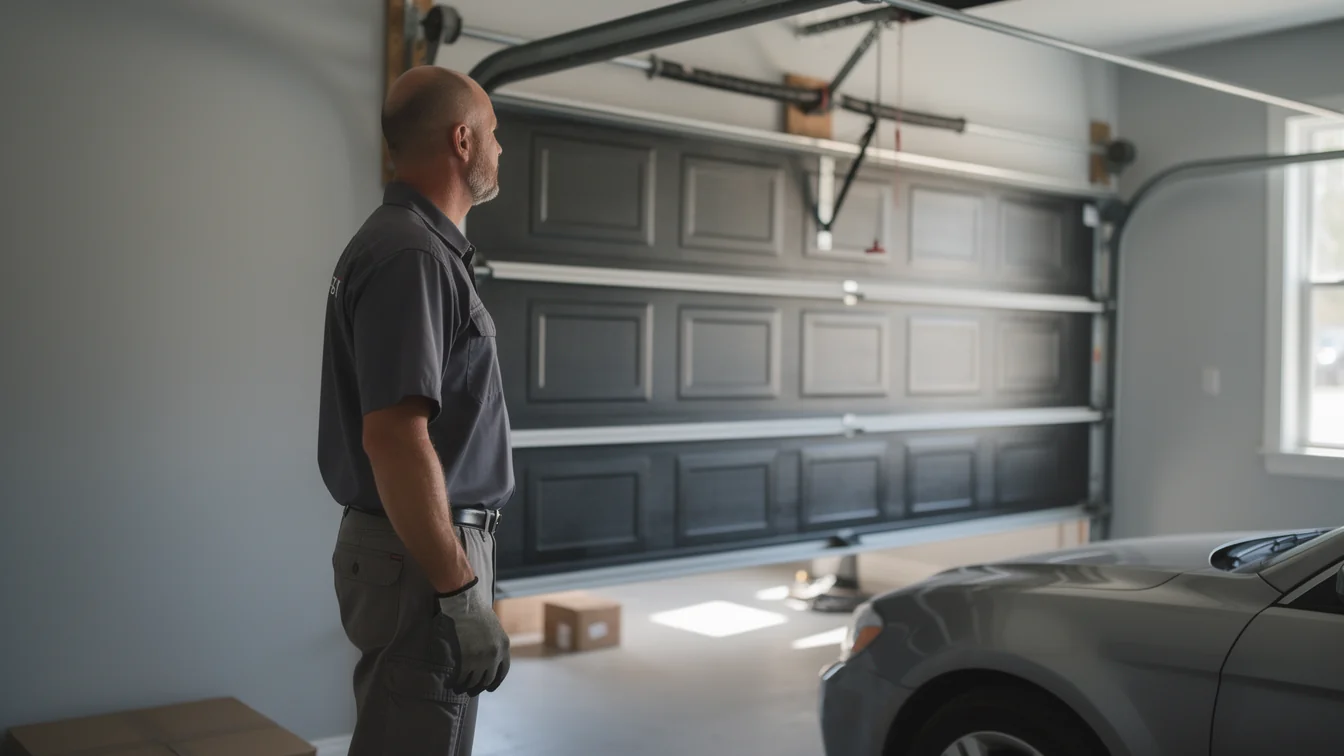
Start at the bottom panel. Houses from the 1960s stock in this area typically have steel doors with little to no foam core - a single layer of metal with an air gap behind it, no insulation rating at all. Press on the bottom panel. If it flexes and feels cold to the touch in winter, that's the original door talking. Check the weatherstrip at the bottom and sides; on a door this old it's usually cracked, shrunk, or missing outright, which lets outside air straight into the garage. Look at the torsion spring setup above the door - original hardware from this era is often a single spring sized for a lighter, uninsulated door, which is a problem if a previous owner ever swapped in a heavier replacement panel without upgrading the spring to match. Last, check the opener. A door this old may still be running its first opener, and parts for units that age are getting hard to source.
What we find
The Situation
This area sits in a cold, severe winter climate band, and the housing stock behind most garage doors here predates any insulation requirement that would've applied to an attached garage. That combination is the actual problem: a 1968-era steel door with no thermal break, facing winters that call for one. It's not a defect in the door - it did what doors from that period were built to do. It's a mismatch between an old door and the weather it's now being asked to handle. If your garage is attached to living space, or if you've got pipes running along that wall, an uninsulated original door is doing less work for you than you'd want in a season like this one.
How we work
What the Weather Here Does to It
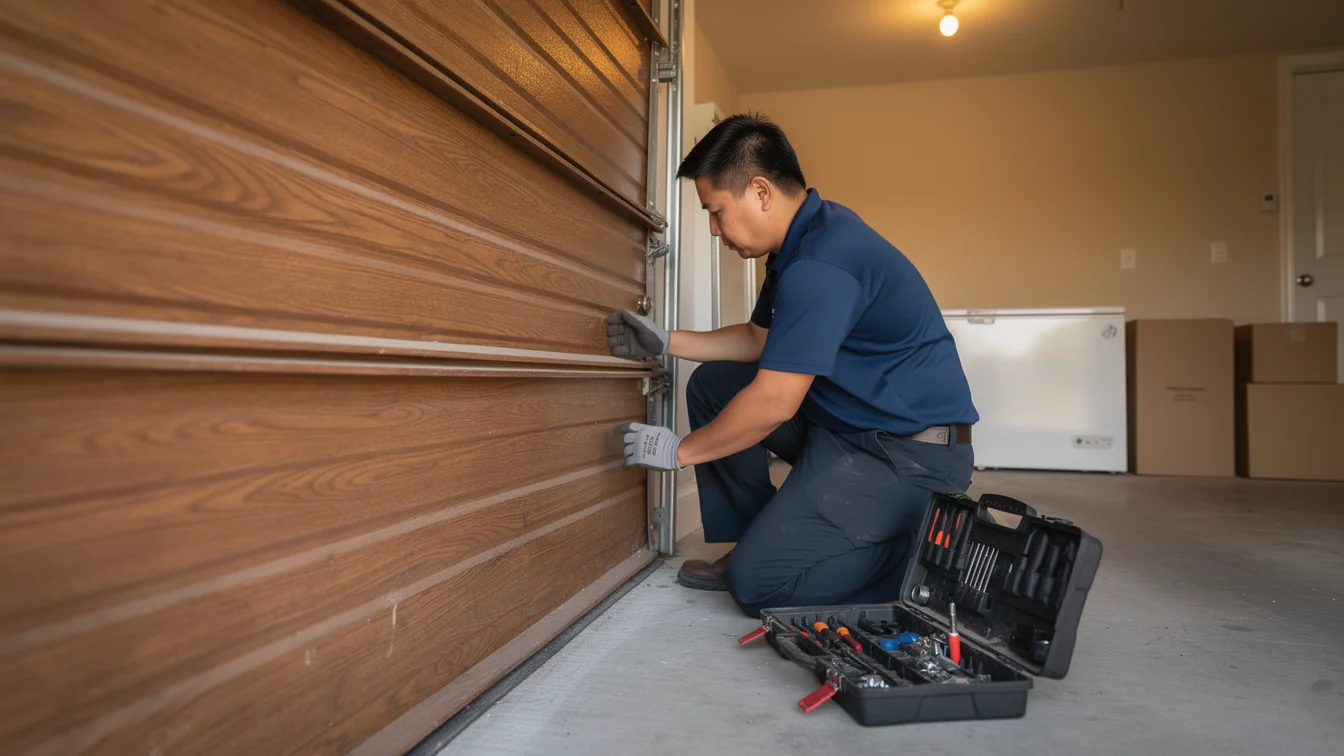
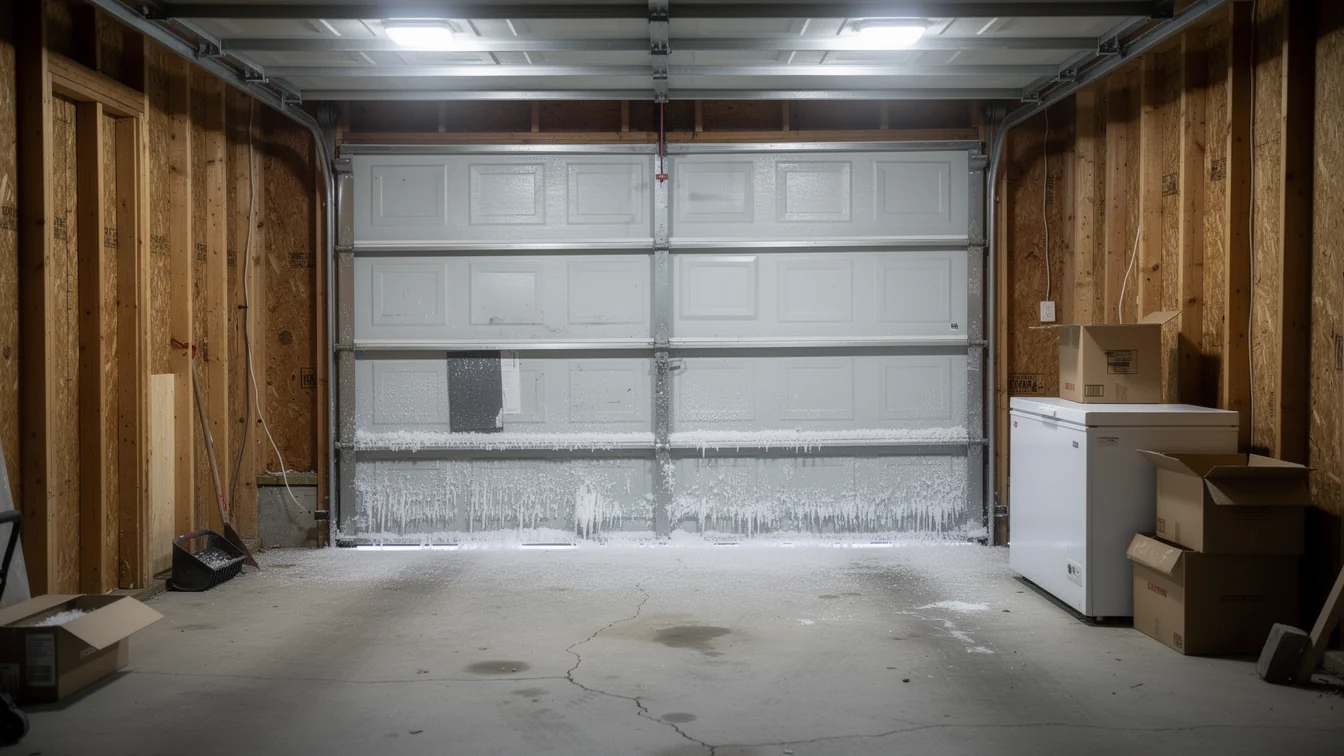
Cold, severe winters are hard on steel that's over fifty years old. Metal contracts in the cold, and on a door with worn or shrunken weatherstrip, that contraction opens gaps at the bottom and sides that weren't there when the door was new. Tracks that were installed plumb in 1968 shift slightly as houses in this area settle over decades, and in cold weather that shows up as a roller binding or a door that doesn't seat flush at the bottom - right where you need the seal most. Torsion springs lose tension faster when they're cycling through temperature swings for fifty-plus years, and a spring that's original to a 1960s build is closer to the end of its life than most owners assume. We won't tell you to replace a door that's still sealing and running fine just because of its age - if the weatherstrip's good and the spring's balanced, a tune-up is the honest call, not a sales pitch for a new door.
Talk to a local pro
Garage door trouble in Framingham?
Same-day service with honest, upfront quotes.