Local detail
What You Pay
We don't have a flat number to put on this page, and quoting one without seeing the door would be a guess, not a price. What a job costs depends on what's actually wrong once a tech has the door up and the spring unloaded safely. A single frayed cable on a 1990s-era door is a different job than a torsion spring and matching bearing plate on a door that's closer to the 1968 median build year for this area. What we can tell you is that on a call in Framingham, the tech prices the job after the inspection below, not before it, because guessing on hardware this old wastes everyone's time. If you want a number before a truck rolls, ask for the inspection to happen first and get the price off that, not off a phone description.
The area
What to Check
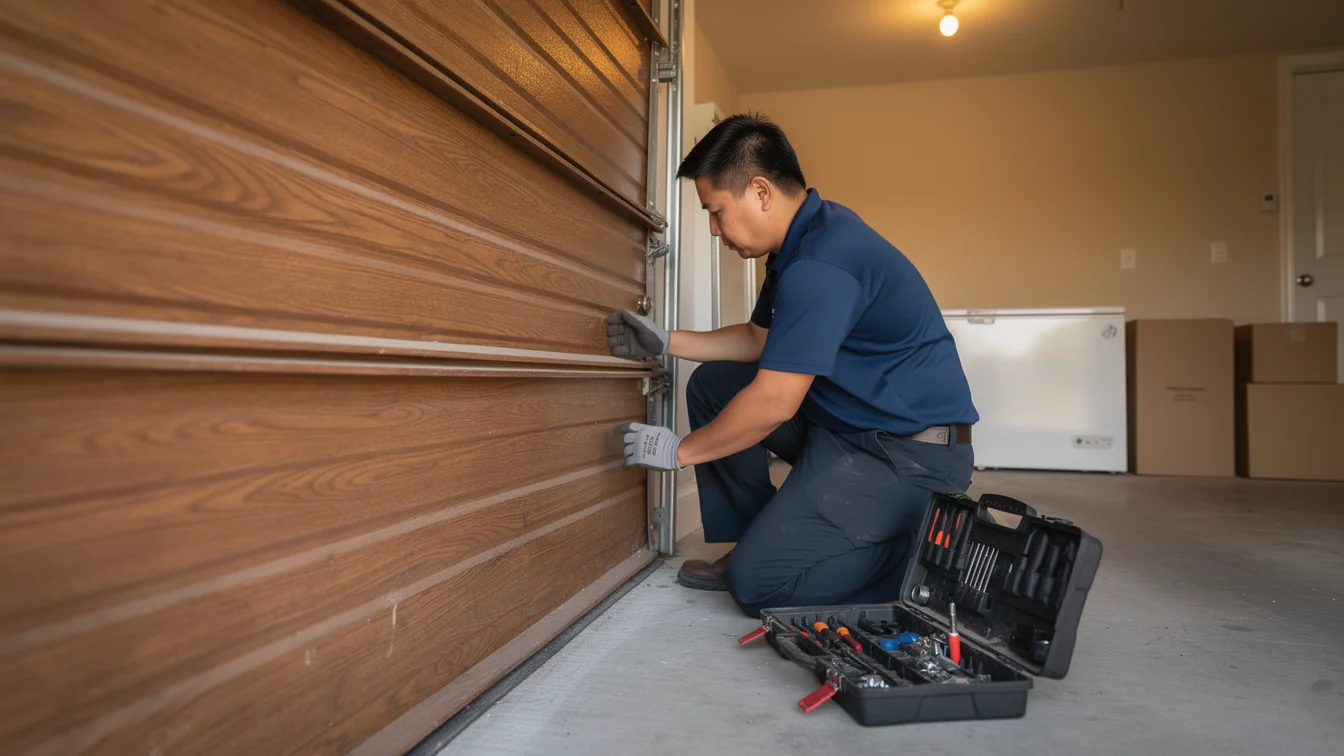
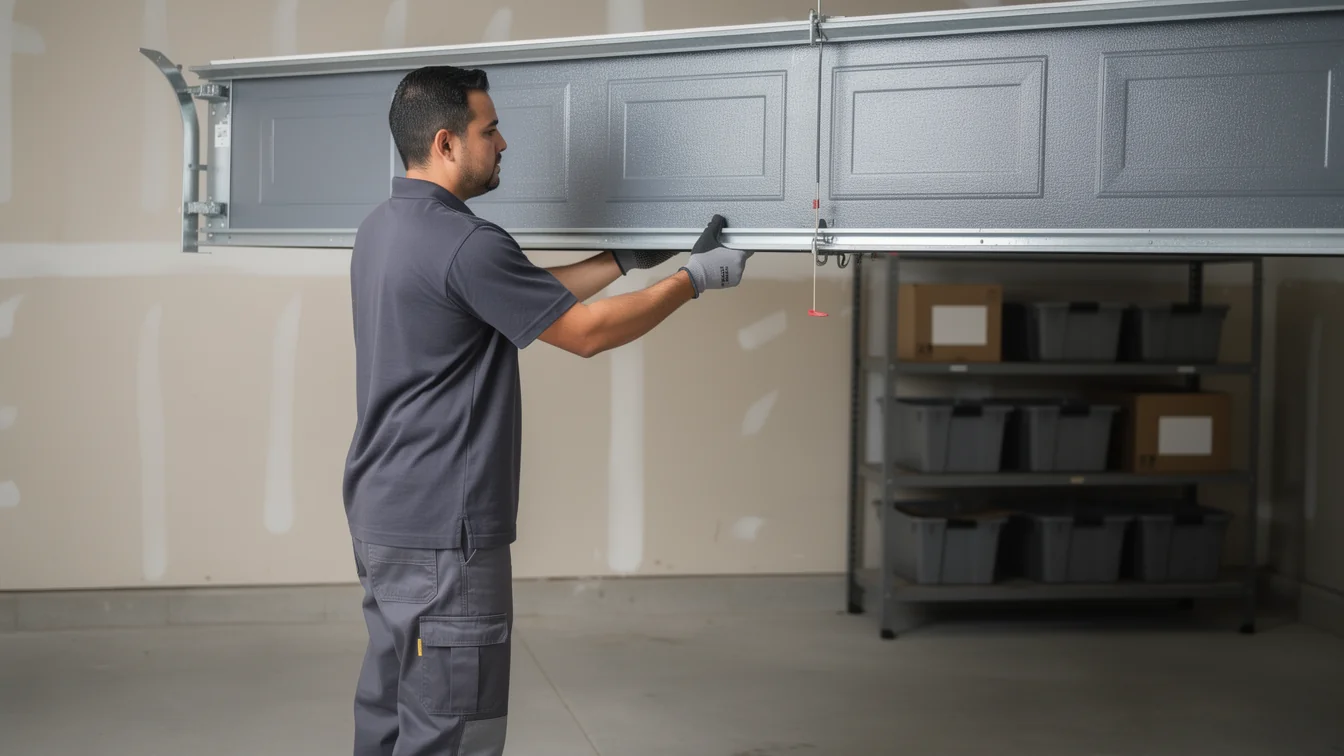
First the spring, because it's under the most load and the most dangerous if it's already cracked. On the stock common around here - doors dating anywhere from 1938 to 1993, with the bulk sitting in that 1960s-70s band - torsion springs are often the original gauge, meaning they're carrying forty-plus years of cycles on metal that was never rated for that. Second, the track and rollers: steel track on a house this old shifts slightly as the slab and framing settle, and a tech checks for a track that's pulled away from the jamb before touching the opener at all. Third, cables and the bottom bracket, since fraying there is the most common reason a door drops unevenly on one side. Only after those three does the opener itself get checked - the gears, the travel limits, the safety sensors. Starting with the opener on a door this age is backwards; a working opener bolted to a bad spring or a bent track just means the failure happens later, with more force behind it.
What we find
The Situation
Framingham sits in a service area made up of 74 named areas, most built out in that same 1960s-70s window, within a few miles of towns like Ashland, Cochituate, Southborough, and Natick, all four to five miles out. That matters for how a tech plans a route and stocks the truck: parts that fit a 1968-era door in one of these neighborhoods usually fit the next one over, which is why we carry the older spring sizes and track hardware rather than assuming everything on the call sheet is a current-model door. Across the broader service area there are roughly 422,524 households and about 199,031 owner-occupied houses, a lot of them original garages with original door hardware nobody's touched since the house was built. A tech walking up to a door in this area starts with an assumption that the hardware predates the opener, often by decades, and checks accordingly instead of treating every call like a newer suburban build.
How we work
What the Weather Here Does to It
This area sits in a cold-severe climate band, and that changes the order of an inspection as much as the age of the house does. Cold stiffens spring steel and thickens old grease on the track, so a door that moves fine in August can bind or slam in January on the exact same hardware - a tech checks spring tension differently depending on the season, not just the door's age. Frost movement under the slab shifts track alignment slightly year over year, which is part of why track-to-jamb gap is checked before the opener gets blamed for a door that won't close square. Bottom seals and weatherstripping matter more here than in a mild climate, since a gapped seal lets cold air and road salt spray reach cables and the bottom bracket, accelerating the fraying that shows up as uneven travel. None of this is exotic - it's just what cold-severe weather does, year after year, to doors that are often older than the owner realizes.
Talk to a local pro
Garage door trouble in Framingham?
Same-day service with honest, upfront quotes.