Local detail
What You Pay
We don't post a flat number for sensor work because the job varies with what's actually wrong. A simple realignment where the brackets just need to be squared up and re-aimed is a short call. If the bracket itself has cracked plastic, if a wire has been chewed or pinched behind the track, or if the sensor eye has corroded inside from years of condensation, that's a parts swap on top of labor. Houses in this area built in the 1960s and 70s, which is most of the stock across the towns we cover, tend to have the second kind of problem more often than new construction does, because the brackets are the originals and the mounting holes have worked loose over fifty-plus years of door travel. We'll tell you on site which one you've got before we touch anything, and we won't replace a sensor that just needs to be re-aimed.
The area
What to Check
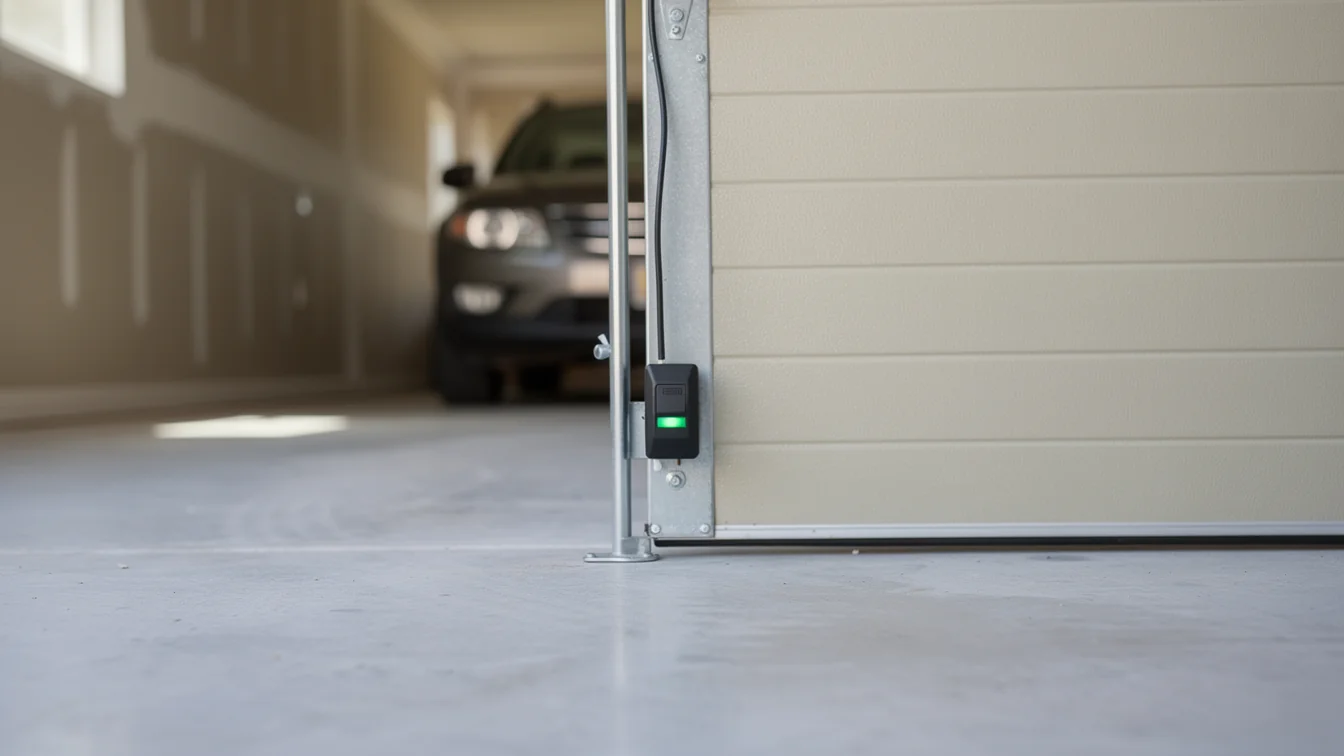
Before you call anyone, look at the two small boxes near the bottom of each track, roughly six inches off the slab. Both should show a steady LED, not a blink. A blinking light on one side almost always means that sensor isn't seeing its partner across the opening. Wipe the lenses first; cobwebs and dust are real culprits in older garages that don't see much airflow. Then check if the bracket itself moves when you nudge it by hand. On houses from the 1938-1993 build range common here, the brackets are often screwed into wood trim that's shrunk and swelled through enough winters that the screws no longer bite tight. If the bracket wiggles, that's your drift, not the sensor electronics.
What we find
The Situation
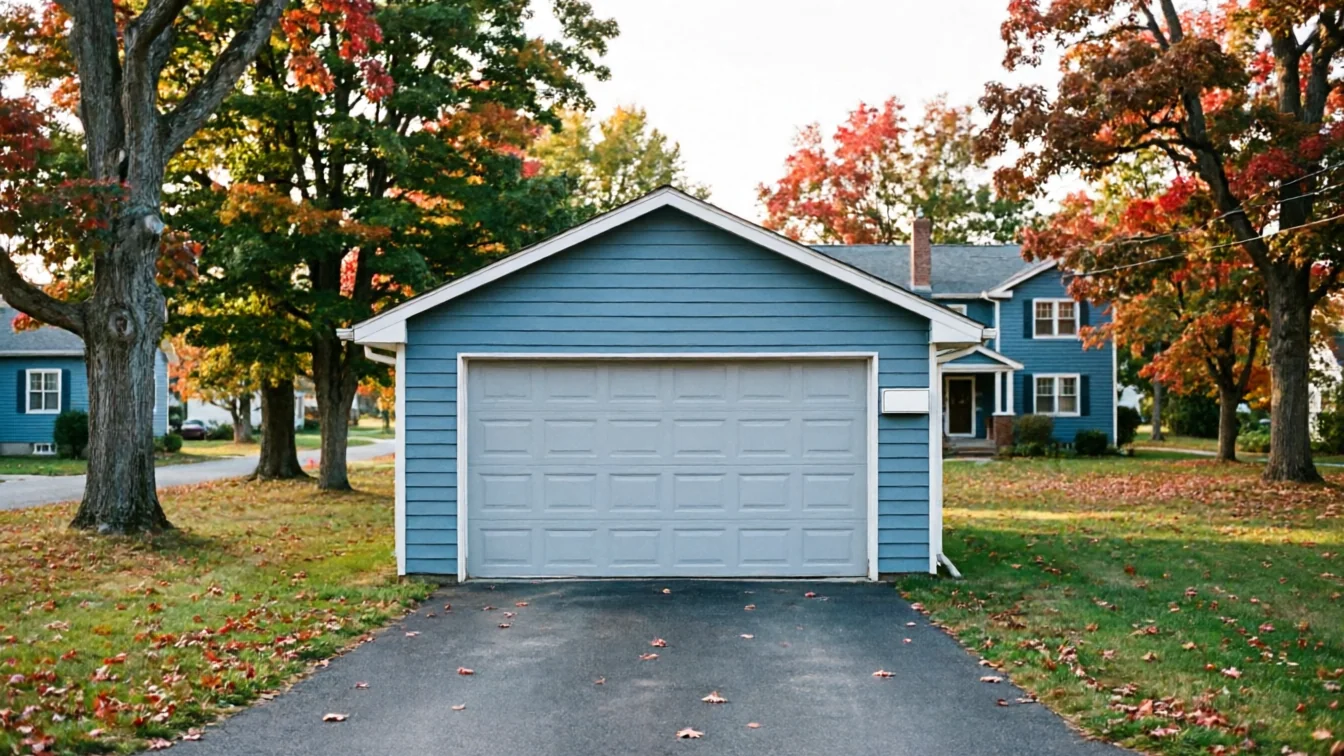
Across the towns we work in, from Ashland and Cochituate a few miles out to Natick, Sudbury, and Wayland a bit further, the housing stock clusters heavily in the 1960s and 70s, with the overall range running 1938 to 1993. That means a lot of garages still have the sensor hardware that came with a door installed decades ago, sometimes retrofitted later when sensors became code-required rather than original equipment. Retrofit brackets are usually the ones we find loose, because they were often mounted into whatever stud or trim piece was handy rather than engineered mounting points. It's not a defect in the door. It's just age catching up to a bracket that was never meant to hold tight for fifty years.
How we work
What the Weather Here Does to It
This is a cold-climate area with real seasonal swings, and that matters more for sensors than people expect. Wood and vinyl trim around the garage opening contracts in deep cold and expands again in summer humidity, and every cycle works at whatever screw is holding a sensor bracket in place. Over a winter or two that movement is enough to tip a sensor's aim a few degrees, which is all it takes for the beam to miss its target. Condensation is the other piece: a garage that goes from near-freezing overnight to warmer during the day can fog the inside of a sensor lens, and homeowners sometimes mistake that for a dead sensor when it just needs to dry out and get wiped down.
Talk to a local pro
Garage door trouble in Framingham?
Same-day service with honest, upfront quotes.