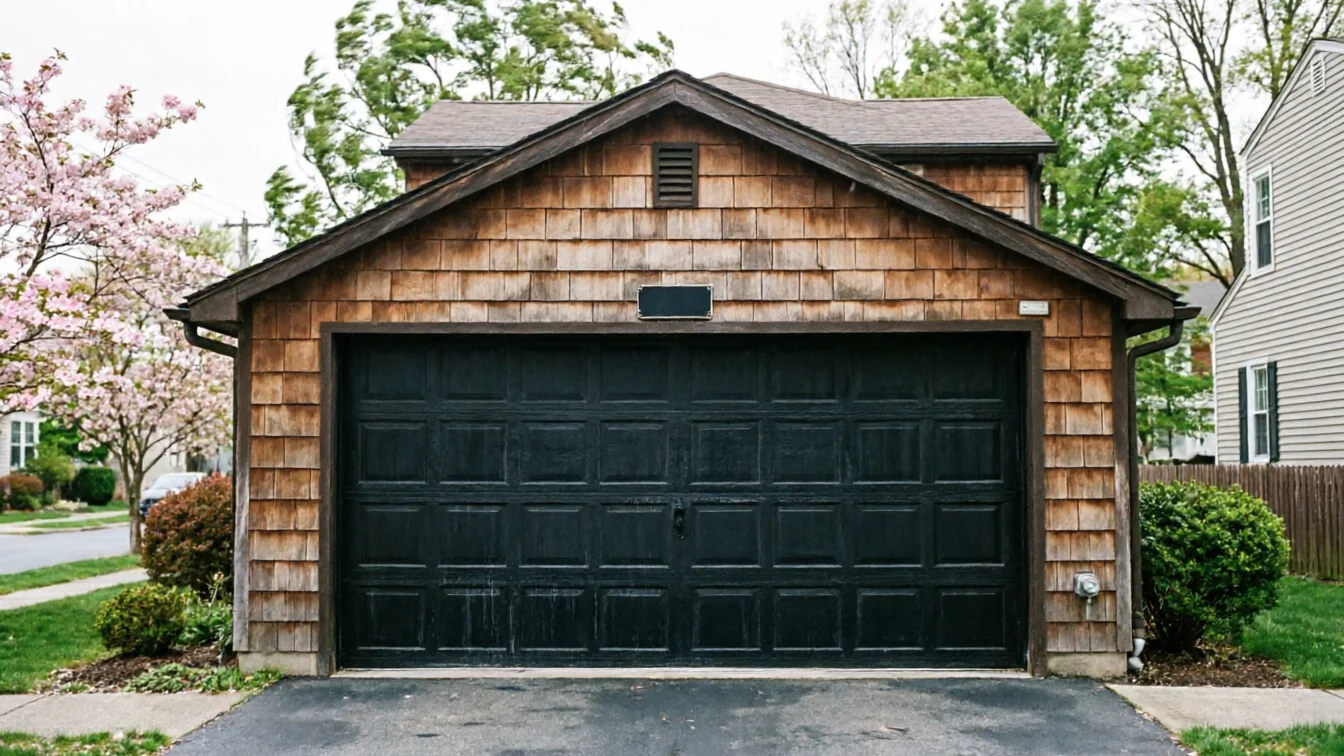
Local detail
What You Pay
We don't quote a number here because it depends on what's actually wrong, but the math on a wide door is different from a single. A 16-foot double door has almost twice the surface area of a single 9-footer, which means more wind load pushing on the same number of rollers and hinges. When one of those hinges or the center stile cracks, you're not patching a small problem - you're often looking at hardware built for a lighter, narrower panel trying to hold a section that's wider than it was ever meant to flex.
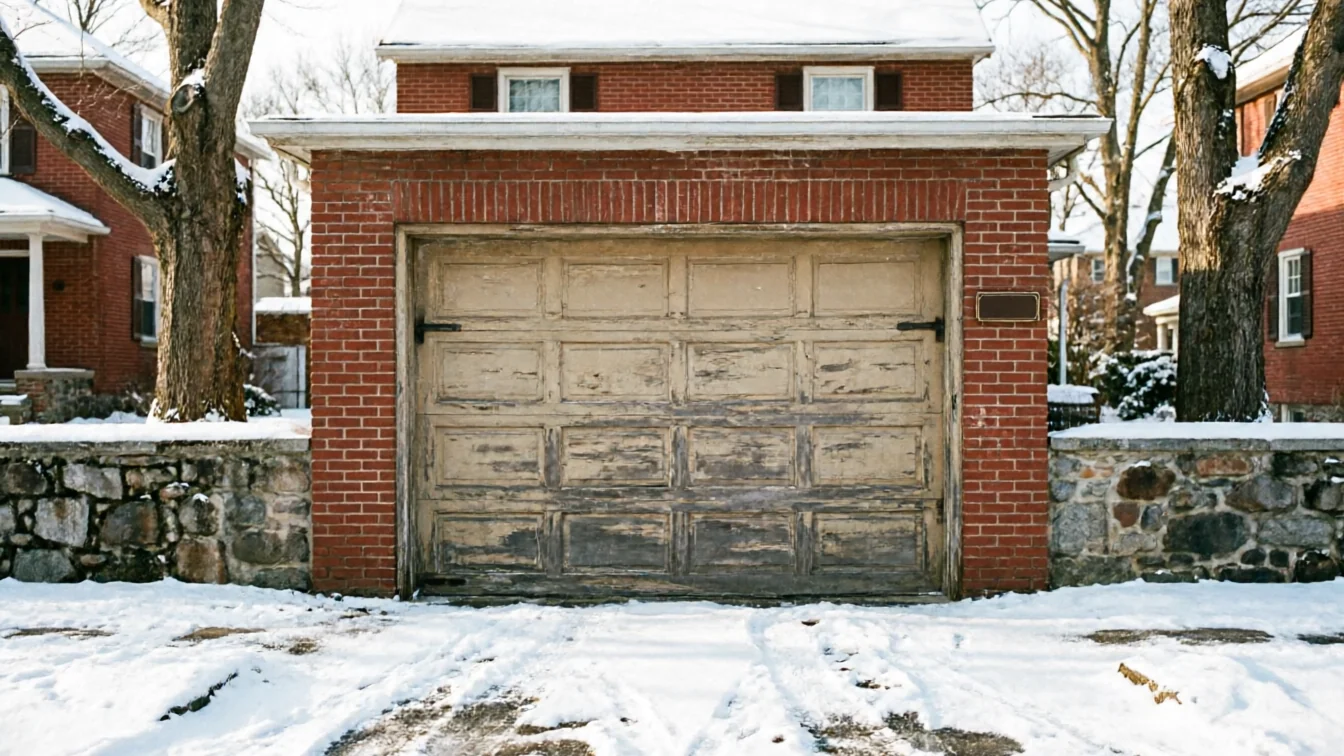
Framingham's median household income sits at $141,440, and across the wider service area there are close to 200,000 owner-occupied houses. A fair number of those houses, going by the age of the stock, were built with a single wide door rather than two single-car doors - which was common in the 1960s and 70s construction boom here. That choice saves space on the driveway. It also means more of the house's garage opening is exposed to wind in one unbroken span, with less structural bracing between panels than a narrower door carries.
We'll tell you straight if a repair isn't worth it against a replacement - on an older wide door with wind damage, that's a real conversation, not a sales pitch.
The area
What to Check
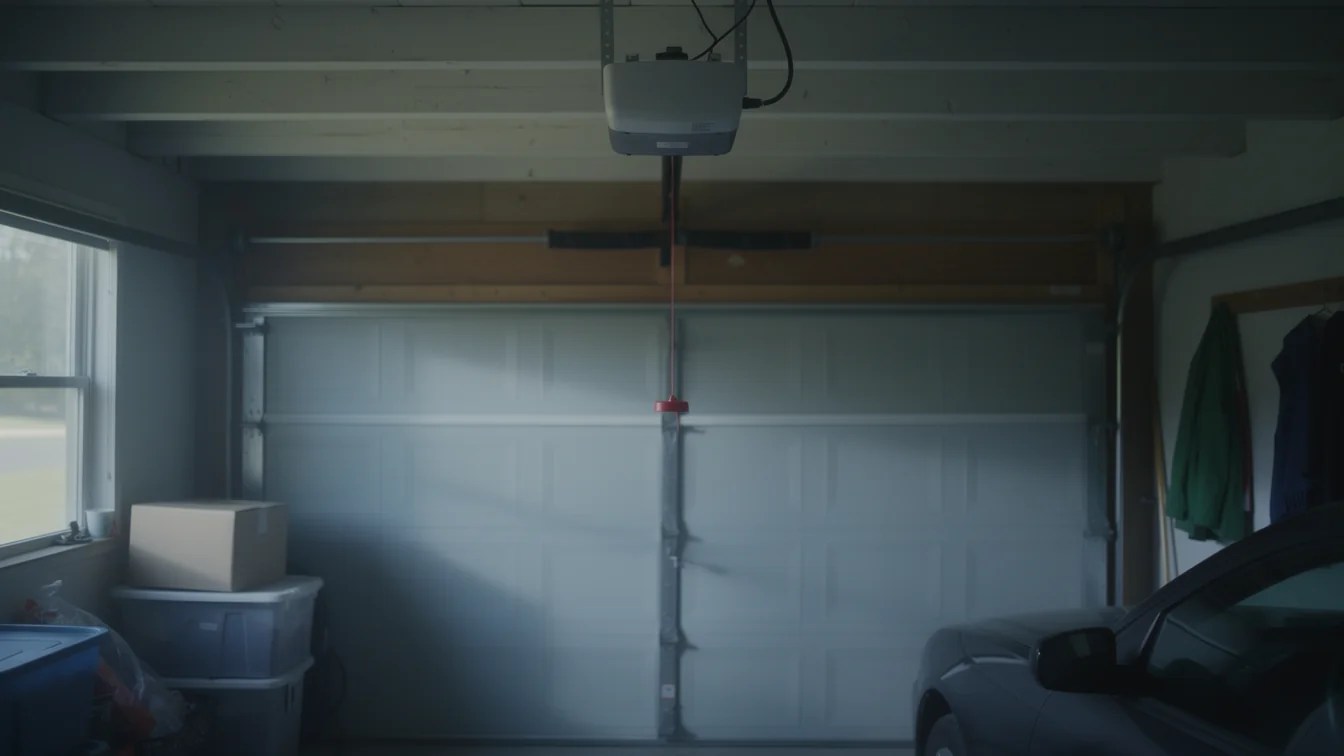
Stand inside the garage with the door closed and look at the horizontal struts - the metal bars running across the back of the top one or two panels. On a 16-foot door built to older standards, there may only be one strut, or a light-gauge one, because wind bracing on wide doors wasn't standardized the way it is now. If you see daylight flexing in at the edges when wind hits the door, that strut isn't doing its job anymore.
Check the center support where the two halves of a wide door's track system meet, if your door has a center post or a continuous header without one. Rust or play at that joint shows up first on wide doors because the span puts more sideways force on it than a single door ever sees.
Look at the end hinges and the rollers nearest the top corners. These take the brunt of racking when wind pushes unevenly across a wide panel - one side ballooning while the other holds. If the rollers are worn oval instead of round, or the hinge leaf is bent rather than flat, that's wind fatigue, not just age.
Last thing: run the opener and watch for the door hesitating partway, which can mean a track that's already bowed from past wind load.
What we find
The Situation
Housing in and around Framingham was mostly built between 1938 and 1993, with the median landing around 1968, and most of what's out there across the 74 named areas in this service territory is 1960s and 70s construction. That era is exactly when wide single-bay garage doors became common on ranch and split-level houses, replacing the older two-single-door layout you'd see on earlier builds.
Those doors were engineered to the standards of their time, which didn't account for the wind-load bracing codes that came later. So a lot of what's sitting in Framingham garages right now is a 50-plus-year-old door, original or a direct replacement to the original size, carrying wind exposure it was never structurally rated for by today's measure.
This isn't a problem unique to one street or one subdivision - it's a function of when this part of the region was built out, and it shows up the same way whether the house is near the center of town or toward the edges of the service area. The door looks fine until a gust catches it at the wrong moment and you find out how much flex was already built into that center panel.
How we work
What the Weather Here Does to It
Framingham sits in a cold-severe climate band, and that cold does something specific to a wide door that it doesn't do as much to a narrow one. Steel track bows slightly with temperature swings, and on a 16-foot span that bow is spread over twice the length, which means more total movement at the points where the rollers ride. In winter, hardened lubricant and stiff rubber bottom seals already make the door heavier to lift - add a gust pushing laterally on a wide panel and you're asking brittle, cold hardware to flex in a way it resists.
The opener feels this too. A motor sized for a door that was easy to roll in October can start straining in January on the same door, now stiffer and heavier with cold grease, right when wind is also loading the panel unevenly. That combination - cold-stiffened hardware plus wind racking a wide span - is what tends to crack an end hinge or pull a bracket loose on these older Framingham doors, more than either factor alone would.
We can't fix the climate. What we can do is make sure the bracing and hardware on a wide door are actually built for the span it's covering, not just whatever came with the house in 1968.
Talk to a local pro
Garage door trouble in Framingham?
Same-day service with honest, upfront quotes.