Local detail
What You Pay
There's no flat number for this because it depends entirely on what's behind the seal. A worn bottom astragal on a steel door from the 1960s-70s building wave is a different job than replacing side seals on a door that's been resized or rehung over the years. What drives the cost in this area isn't labor rates - it's parts availability for doors that match the original 1938-1993 housing stock, where panel widths and track spacing don't always match what a big-box seal kit assumes.
Median household income across the service area runs well above the national figure, and that shows up in what people are willing to fix versus replace. We'll tell you straight if a seal swap buys you a few more winters or if the door itself - steel skin thinning, frame racked from decades of settling - makes a seal job money you won't get back. We don't quote a number until we've seen the actual door and frame, because guessing on an unseen job wastes your time and ours.
The area
What to Check
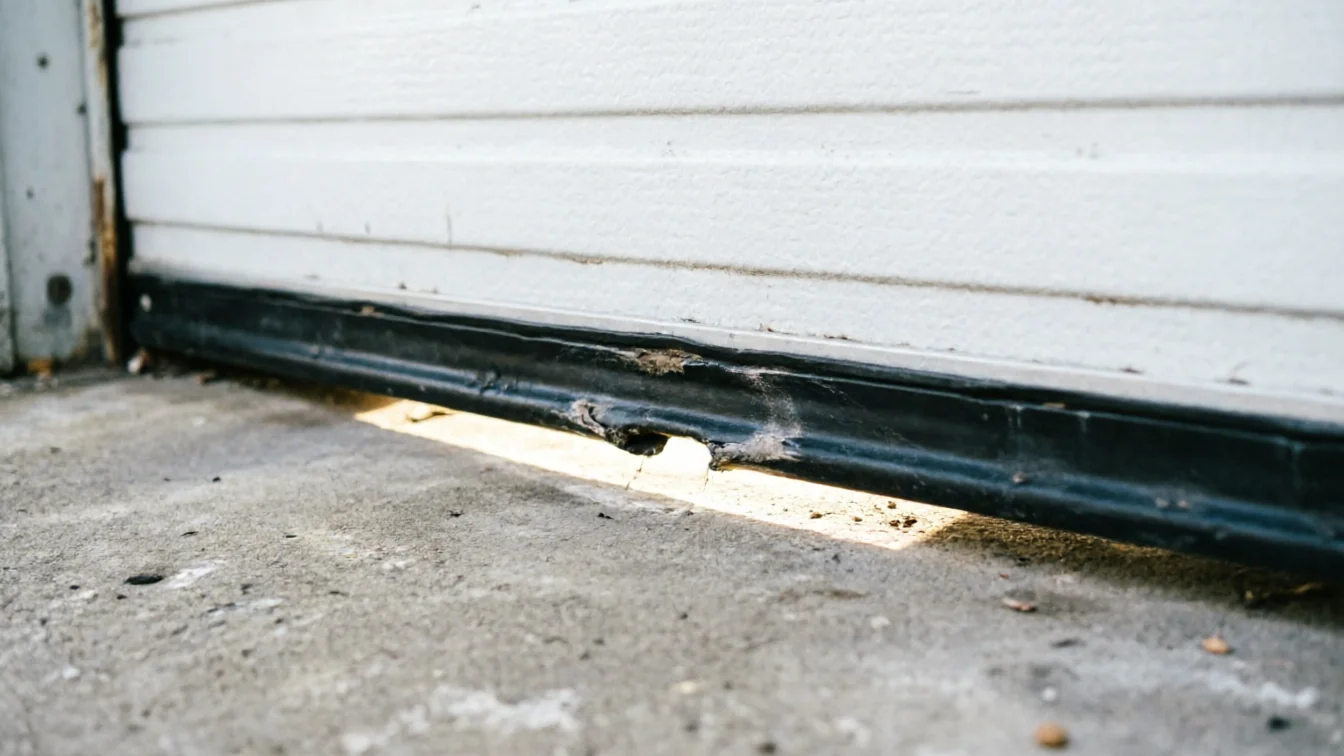
Start at the bottom. On doors from the 1960s-70s stock common across this area, the bottom astragal is usually the first seal to go, because it takes direct contact with the slab every open and close cycle. Run your hand along it on a cold morning - if you feel air moving through a gap you can see daylight through, that's your draught source, not the door panel itself.
Next, check the side seals and the top seal where the door meets the frame. Original builds from the 1938-1993 window often used a seal profile that's gone brittle and cracked rather than compressed and worn, which is a different repair than you'd expect on a newer door. Brittle vinyl snaps instead of flexing, so pieces go missing over a few seasons without anyone noticing until the gap is obvious.
Also look at the stop molding, the wood or aluminum strip the side seal presses against. On older frames it's often warped or pulled away from the jamb, and no amount of new weatherstripping fixes a seal pressing against a gap instead of a flat surface. If the molding's the problem, that's a different fix than a seal swap.
What we find
The Situation
Across the roughly 74 named areas that make up this part of the service territory - from places four miles out like Ashland and Cochituate to towns eight to twelve miles off like Weston, Acton, or Milford - the housing stock clusters tightly in one era. Median build year sits around 1968, with most homes going up between 1938 and 1993. That means a large share of garage doors in daily use were installed, or at least originally fitted, during a stretch when steel panel doors with minimal insulation and basic vinyl seals were standard.
With 199,031 owner-occupied houses across the service area, that's not a small or scattered problem - it's a consistent pattern tied to when this area was built out. A door that's sealed fine for forty winters can still fail suddenly once the vinyl hits the point where cold makes it brittle rather than pliable. We see the same failure mode repeat house after house in neighborhoods built in that same twenty-year window, whether you're close in or out toward Southborough or Sudbury.
How we work
What the Weather Here Does to It
This area sits in a cold climate band classified as severe, which means real sustained subzero stretches, not just the occasional frosty week. That matters for seals specifically: vinyl and rubber weatherstripping has a cold threshold below which it stops flexing and starts cracking, and repeated freeze-thaw cycles through a Massachusetts winter accelerate that breakdown faster than milder climates would.
On doors original to the 1938-1993 housing stock, you're often dealing with seals that have already taken fifty-plus winters of that cycle. The track hardware reacts too - cold metal contracts, and a track that's slightly out of plumb from decades of house settling will bind harder in January than it does in July, which puts more strain on rollers and cables right when the seals are also failing. One thing we won't do is sell you a seal kit as a fix for a door that's racked or a track that's bent; weather seals and draughts are a symptom, and on an older door the underlying cause is sometimes the frame itself, not the rubber.
Talk to a local pro
Garage door trouble in Framingham?
Same-day service with honest, upfront quotes.