Local detail
What You Pay
We're not going to put a number here that doesn't hold up once we're standing in your garage. A dead opener from a power cut usually isn't a repair bill at all - it's a five-minute fix with the manual release, and that costs nothing. What turns into a real job is when the outage exposes something that was already failing: a chain drive that's been slipping for months, a motor winding that finally gave out under the extra strain of repeated restarts, or a logic board that doesn't like the power blinking on and off during a storm. Framingham's housing stock runs mostly 1960s and 70s, and a lot of openers in those garages have been swapped once or twice since the house was built, so the unit we find rarely matches the house's age. We quote once we've seen the brand, the drive type, and whether the board survived the surge. If you want a ballpark before that, we don't have one that's honest.
The area
What to Check
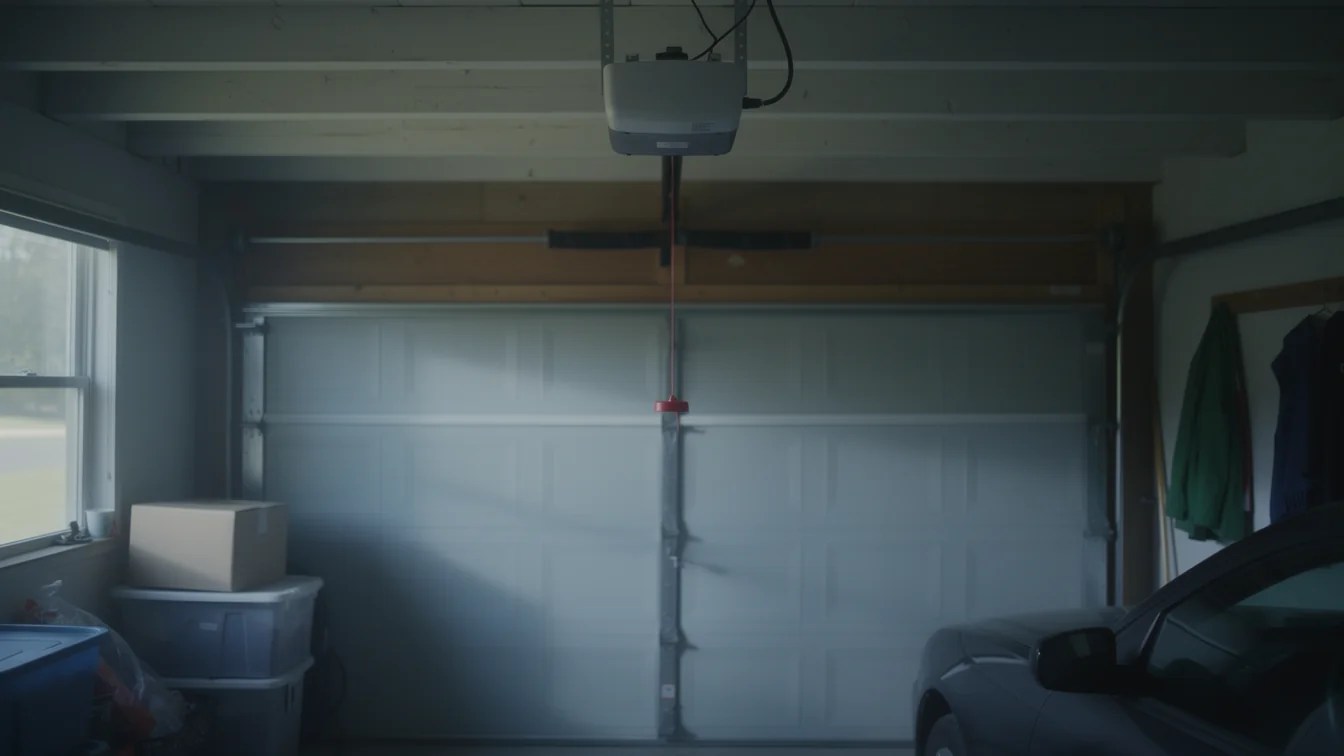
Before you call anyone, find the manual release cord - the red one hanging from the trolley on the track. Pull it down and back to disconnect the opener from the door so you can lift it by hand. If the door is heavy or won't stay up on its own, stop; that's a spring problem, not an opener problem, and it's not safe to force. Next, check whether your unit has a battery backup box, usually a small case bolted near the opener head. A lot of the openers installed in this area's 1960s-70s housing predate battery backup as a standard feature, so if yours cuts out completely during an outage with no battery chirp, that's normal for the unit, not a sign it's broken. Check the wall control too - some have a small light or beep pattern that tells you if the board itself lost power cleanly or got hit with a surge. Write down what you see before you call; it saves a diagnostic trip.
What we find
The Situation
Framingham sits in a cluster of towns within about 4 to 12 miles - Ashland, Cochituate, Southborough, Natick, Sudbury, and a couple dozen others - and the housing age across that whole stretch is similar: built mostly between 1938 and 1993, with the median landing around 1968. That matters for openers because a house wired in the late 1960s or 70s wasn't built with a dedicated circuit expectation for a garage door motor, let alone a battery backup unit, which didn't become common until decades later. Across the roughly 199,031 owner-occupied houses in this broader service area, the opener is almost never original to the house - it's a replacement, sometimes a replacement of a replacement - but the garage wiring behind it often is. When the power cuts and the opener won't take a battery backup retrofit cleanly, it's frequently because the circuit itself is older than the unit you're trying to run on it. That's worth knowing before you spend money on a backup battery that the wiring can't really support.
How we work
What the Weather Here Does to It
This area sits in a cold-severe climate band, and that shows up in openers in a few specific ways. Battery backup units lose a meaningful chunk of their rated runtime once temperatures drop, so a backup that's supposed to carry you through an outage for 20-plus cycles might manage half that on a cold January night. Chain and belt drives both stiffen up in cold garages, which means the motor works harder on every cycle during winter, and that extra load is exactly what tends to finish off a winding that was already marginal. Power cuts also tend to cluster with winter storms in a cold-severe climate, which means the outage and the cold stress hit the opener at the same time, not separately. If your opener has been due for a motor or logic board replacement anyway, winter is when that gets exposed. One honest limitation: we don't carry every board for every opener brand on the truck, so if yours is an older or less common model, the fix sometimes waits on a part.
Talk to a local pro
Garage door trouble in Framingham?
Same-day service with honest, upfront quotes.